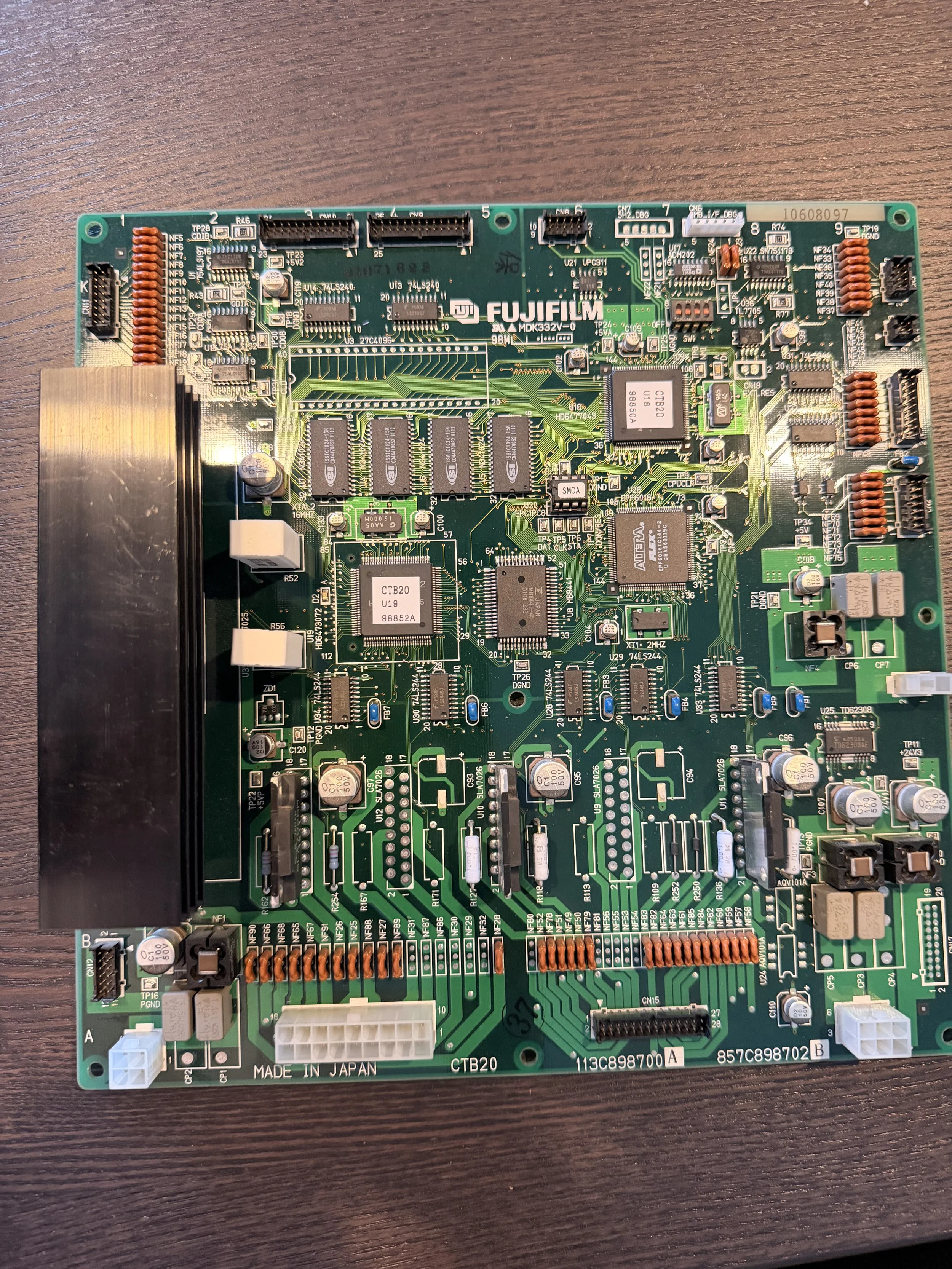
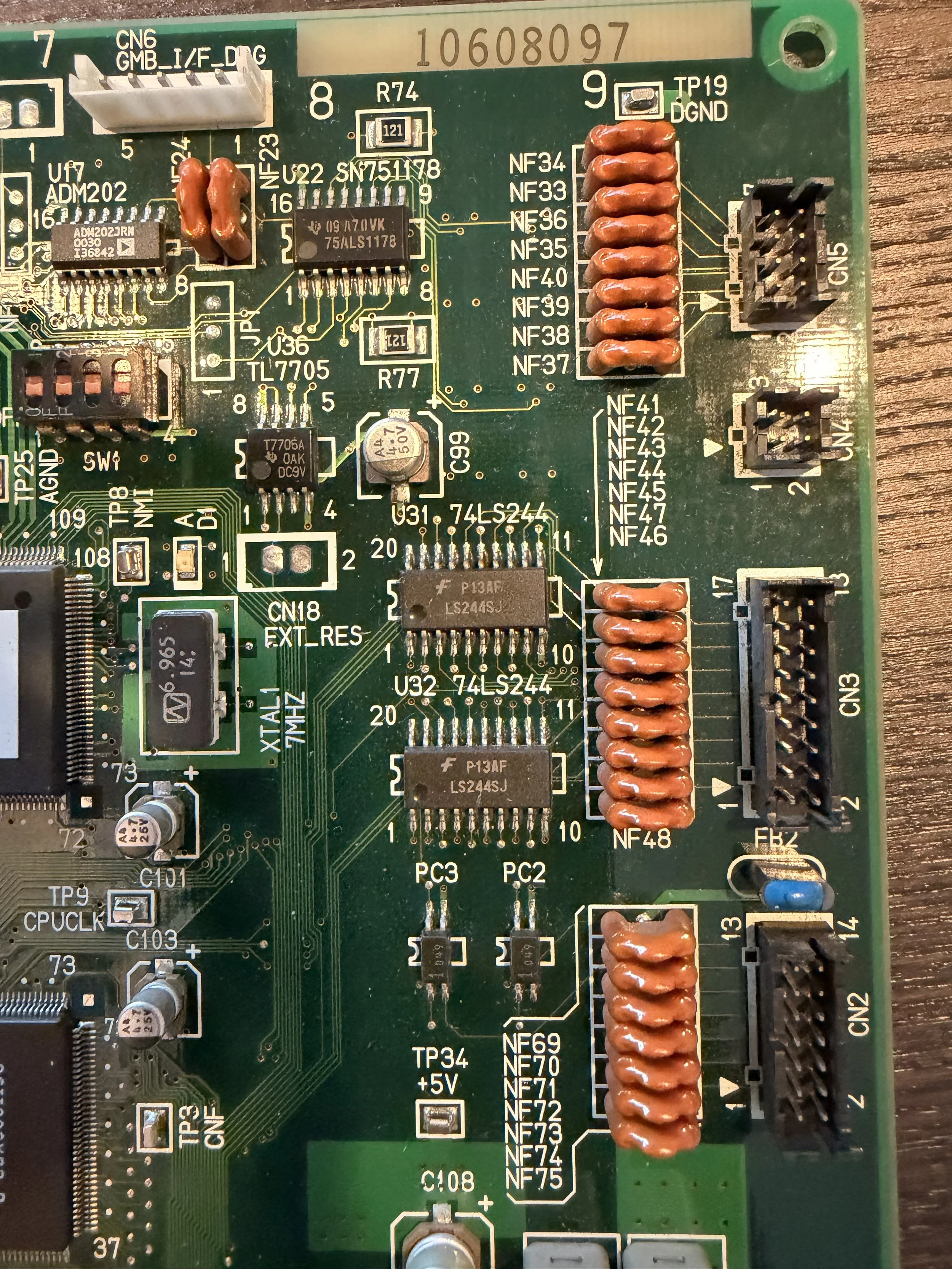
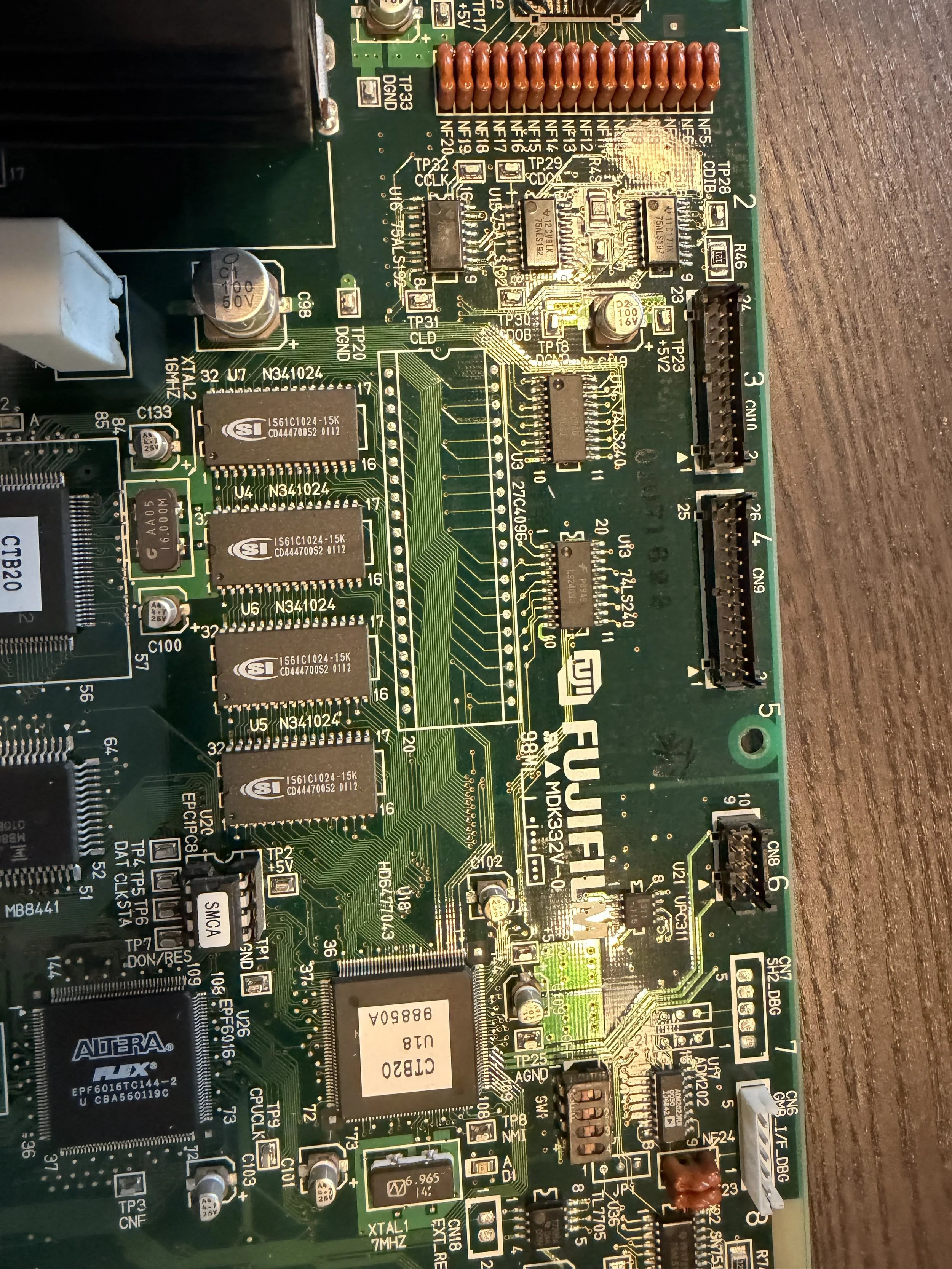
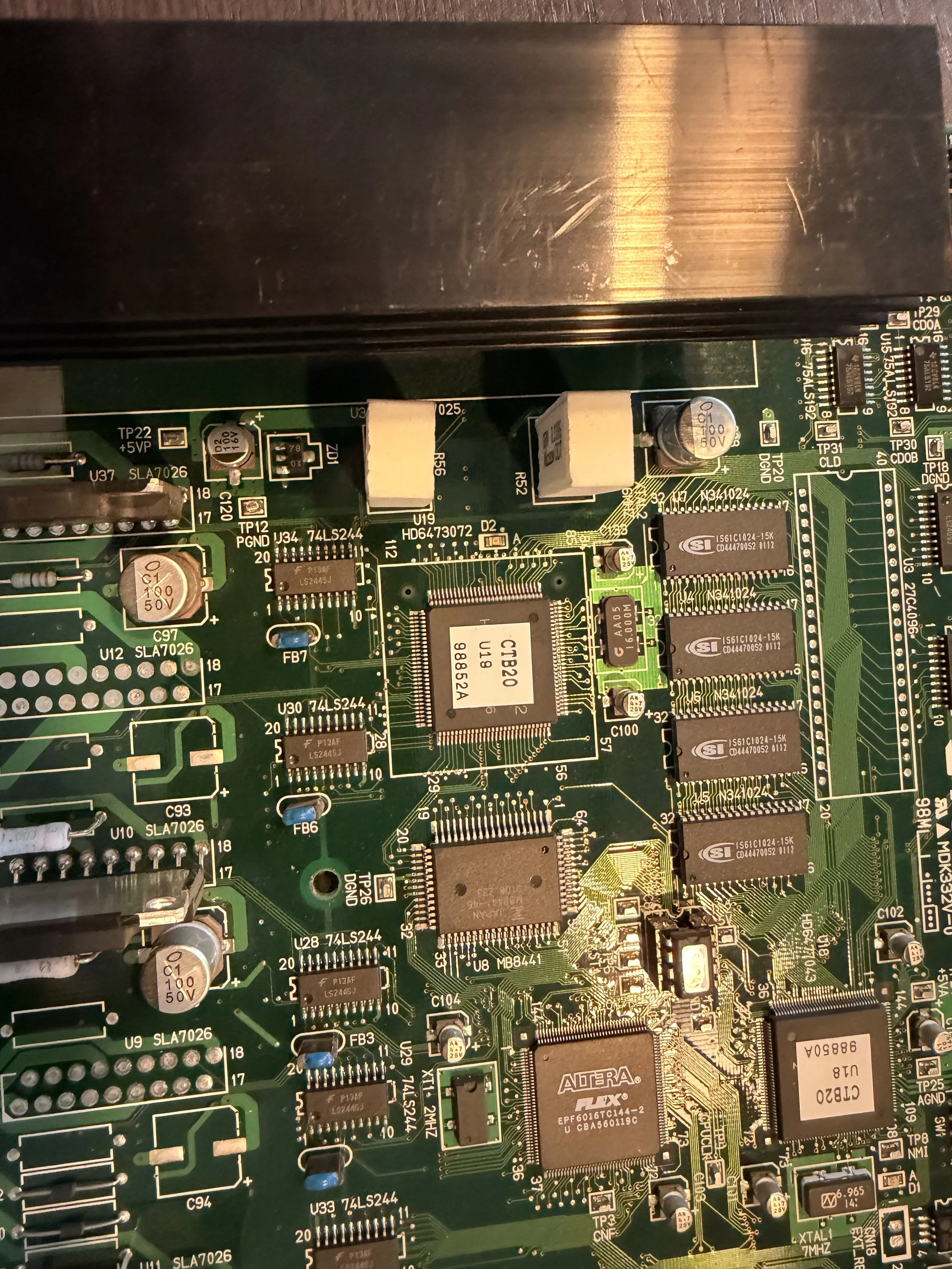
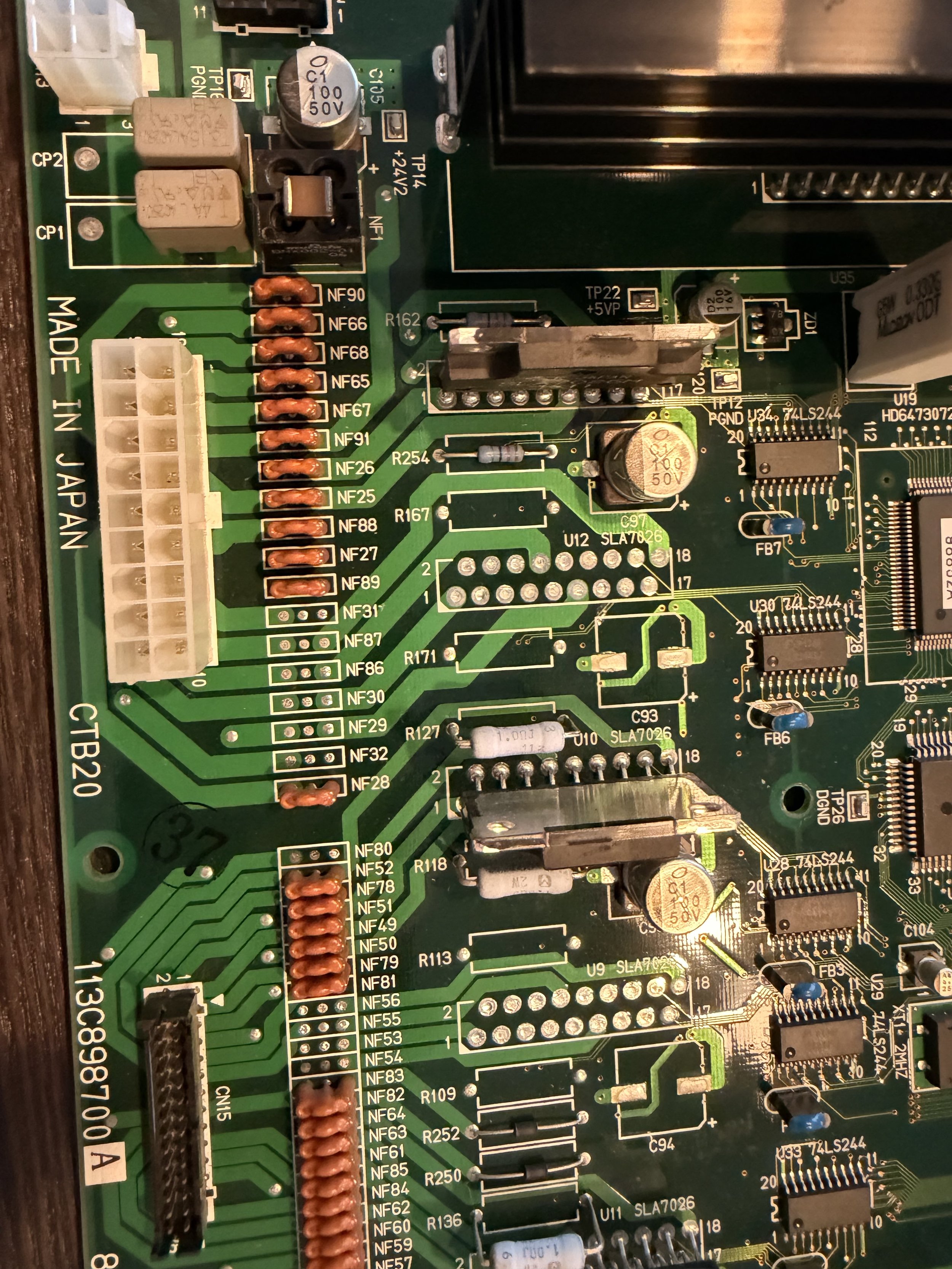
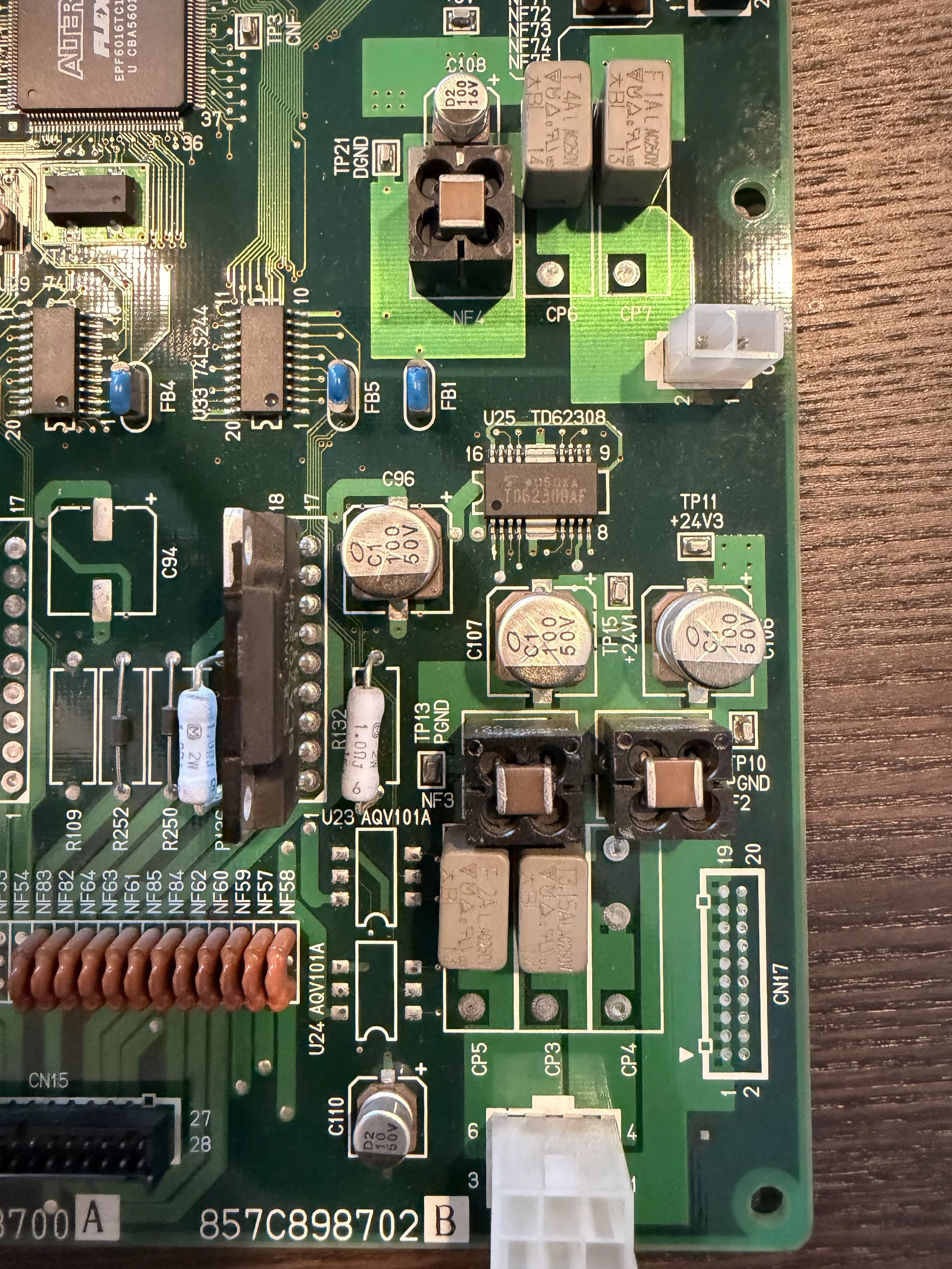
Fujifilm Frontier CTB20 Circuit Board
The Core Mechanical Control System of the Frontier Scanner
The CTB20 circuit board is one of the most critical electronic control components used in Fujifilm Frontier digital minilab systems, including scanners such as the SP-1500, SP-2000, and related Frontier 3xx series platforms.
Often misunderstood as a simple interface board, the CTB20 is in reality the central mechanical and light-source control CPU responsible for coordinating the physical operation of the scanner during film digitization.
Overview
The CTB20 (Control Technology Board 20) functions as the real-time hardware controller between the Frontier’s image processing electronics and the scanner’s physical subsystems.
Its primary responsibility is to translate digital control commands into precise mechanical and electrical actions required for film scanning.
According to Fujifilm service documentation, the CTB20 is defined as:
A CPU circuit board responsible for mechanical control and scanner subsystem operation
Without a functioning CTB20 board, the scanner cannot safely initialize or operate its optical system.
Primary Functions
1. Light Source Control
The CTB20 directly controls the scanner illumination system, including:
Scan lamp activation
Lamp standby and operating voltage switching
Light intensity regulation
Synchronization with CCD exposure timing
The Frontier scanning lamp typically operates around:
≈29 V during scanning
≈20 V in standby mode
Stable lamp control is essential for consistent density and color reproduction during film scanning.
2. Film Carrier and Transport Control
The CTB20 manages all motion-related scanner functions:
Film carrier positioning
Frame advance control
Motor drive timing
Lens positioning mechanisms
Mechanical interlocks
This ensures film moves with micron-level precision during prescan and fine scan operations.
3. Lens and Optical Assembly Coordination
The board communicates positioning data to:
Autofocus mechanisms
Lens movement systems
Optical alignment assemblies
Incorrect CTB20 operation may cause:
scan initialization failures
focus errors
exposure instability
scanner startup lock conditions
4. Communication Hub (RS-422 Interface)
The CTB20 communicates continuously with other Frontier boards using industrial serial communication.
Key communication path:
Image Processing CPU (GMB20/GMC20)
⇅ RS-422
CTB20
⇅
Light source / Carrier / Lens systems
This RS-422 link exchanges:
control signals
status feedback
synchronization timing
hardware fault states
Because of this, CTB20 failures often appear as unrelated system errors.
Position Within the Frontier Architecture
A simplified scanner electronics hierarchy:
CCD20 — CCD sensor drive and signal amplification. Responsible for operating the CCD imaging sensor and preparing analog image signals for processing.
CDS20 — Analog-to-Digital conversion. Converts the analog signal from the CCD into digital image data used by the scanner system.
GIP20 — Image processing board. Performs initial image processing operations before data is transferred to the main system CPU.
GMB20 / GMC20 — Main image processing CPU. Handles overall scanner control, image management, and communication with the Frontier software system.
CTB20 — Mechanical and light source control. Controls scanner mechanics, film transport, optical systems, and illumination hardware.
PWR20 — Power supply management. Distributes and regulates electrical power to all scanner subsystems and circuit boards.
The CTB20 acts as the bridge between digital image processing and physical scanner hardware.
Hardware Characteristics
Typical specifications:
Fujifilm OEM PCB
Part number: 857C898702
Dedicated onboard control CPU
Industrial RS-422 communication
Multiple I/O control headers
Lamp power interface terminals
Integrated protection circuits
Designed for continuous 24/7 minilab operation
The board was engineered for commercial photolab environments where machines often operated continuously for years.
Common Failure Modes
After decades of operation, CTB20 boards may develop faults due to age or environmental stress.
Typical causes include:
Thermal Stress
Frontier scanners generate significant internal heat.
Long unattended operation can accelerate component degradation.
Electrolytic Capacitor Aging
A frequent issue in aging units:
leaking capacitors
unstable voltage regulation
intermittent startup faults
Power Events
Unexpected shutdowns or extended powered states may damage control circuitry.
Communication Failure
Loss of RS-422 communication can trigger errors such as:
scanner initialization failure
light source errors
safety thermostat faults
startup halt conditions
Typical Symptoms of CTB20 Failure
Operators may experience:
Scanner powers on but does not initialize
Light source remains inactive
Persistent hardware safety errors
No additional diagnostic faults
Random startup failures
Mechanical systems not responding
Because the CTB20 supervises multiple subsystems, failures are often misdiagnosed as:
power supply issues
thermostat faults
lamp problems
fan or airflow alarms
Importance in Long-Term Frontier Maintenance
Today, CTB20 boards have become one of the most valuable spare parts for maintaining operational Frontier scanners.
Reasons include:
No modern replacement exists
Limited surviving inventory
Increasing collector and lab demand
Essential for scanner survival
For many Frontier owners, maintaining spare CTB20 boards is considered mandatory for long-term machine preservation.
Engineering Perspective
The Frontier architecture represents late-1990s Japanese industrial engineering at its peak:
distributed CPU control
deterministic serial communication
hardware-level synchronization
modular field-serviceable electronics
The CTB20 embodies this philosophy — a dedicated embedded controller ensuring mechanical precision independent of the host PC.
Conclusion
The CTB20 circuit board is not merely a spare part — it is the operational heart of the Frontier scanner’s mechanical and optical control system.
A functioning CTB20 enables:
✔ Stable illumination
✔ Accurate film transport
✔ Reliable scanner startup
✔ Consistent professional scan quality
Preserving these boards is essential for keeping Fujifilm Frontier scanners operational in the modern analog photography era.